

POISON GAS TRAGEDY IN ITALY’S BARI HARBOR
Bari, Italy · December 2, 1943
World War I combatants had used a variety of poison gases on each other ranging from incapacitating and temporarily blinding the enemy to gases that burned the body, destroyed the lungs, and liquefied tissues. Sometimes their use had unintended consequences, as when the gases inflicted casualties on the users themselves—something we today might associate with “friendly fire.” Every nation had stockpiles of poison gas artillery shells ready for use in the Great War, this despite the Hague Convention of 1899, which outlawed their use.
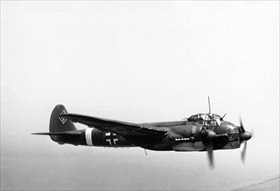
On this date in 1943 a squadron of German Junkers Ju 88 bombers flew over the port of Bari on Italy’s Adriatic coast, newly liberated by the Allies, and sank 27 ships, among them the SS John Harvey. The ship, crewed normally by 81 seamen, carried explosive munitions and a secret consignment of 2,000 mustard gas shells. Hit amidships, the U.S. Liberty ship was destroyed in a huge explosion, causing liquid sulfur mustard to spill into the water and a toxic cloud of mustard vapor to blow over the city. It was the only (and unintentional) release of chemical weapons in the course of the World War II by the Allies. (Japan used poison gas in combat operations in China.)
So secret was the transport of this poison gas—President Franklin D. Roosevelt had approved its shipment the previous August—that ignorance reigned supreme during the catastrophe. British harbor authorities did not know of the deadly nature of the cargo—all in the know on the John Harvey had been killed. Doctors, medical staff, and rescuers who attended the dying—more than one thousand Allied servicemen and more than one thousand civilians—were baffled by the mysterious symptoms, which only became evident a day after the event. Tragically, sailors who tried rescuing themselves by jumping into the water became covered with fuel oil leaking from damaged and sinking ships, and this poisonous mixture of oil and sulfur mustard provided an ideal solvent for penetrating the victims’ skin and causing chemical burns and temporary blindness. Among U.S. servicemen alone, over 80 died of the effects of the gas before the end of the year. Although the Germans experimented with poison gas hundreds of times on prisoners and concentration camp inmates, Adolf Hitler, himself a victim of a gas attack in World War I, never ordered its use in combat.
Chemical Disaster at Bari, Italy, 1943
 |
 |
Left: Capable of carrying 504 soldiers, the SS John Harvey instead carried a top-secret cargo of 2,000 M47A1 mustard gas bombs, each of which held 60–70 lb of toxic sulfur mustard. The bombs were to have been stockpiled in Italy and used in case the enemy used poison gas first. (There was never any evidence that Germany intended to use poison gas in combat, but President Roosevelt decided to prepare for the worst.) During the evening air raid the ship, which took a direct hit, went down with all hands, contaminating the harbor’s water and Bari’s air. In the aftermath, thousands of people who lacked external wounds died mysteriously—they died of massive infections—because the cause of their symptoms was unknown and the rendered treatment was inappropriate. The Allies covered up the chemical disaster, not wanting the Germans to learn that they were stockpiling war gas for potential use, so the Bari tragedy is not well known.
Right: The air raid on Bari (population 250,000) by 105 German twin-engine Junkers Ju 88 bombers, flying in from the Adriatic Sea instead of over land from the north, achieved complete surprise. Targeted were shipping and personnel operating in support of the British Eighth Army following the September 1943 Allied-Italian armistice. The air attack on the brightly lit harbor, which lasted a little more than one hour, sank 27 cargo, transport, and naval vessels, plus a schooner, and damaged a dozen more ships in the overcrowded Bari harbor. It put the port out of action until February 1944 and was called the “Little Pearl Harbor.”
December 2, 1943, Bari Poison Gas Disaster and Allied Cover-Up

World War II was the single most devastating and horrific event in the history of the world, causing the death of some 70 million people, reshaping the political map of the twentieth century and ushering in a new era of world history. Every day The Daily Chronicles brings you a new story from the annals of World War II with a vision to preserve the memory of those who suffered in the greatest military conflict the world has ever seen.