

SOVIETS OVERRUN PARTS OF ROMANIA
Bucharest, Romania • June 27, 1940
On this date in 1940 Red Army troops invaded Romania in the wake of Romanian King Carol II’s refusal to cede the eastern territories of Bessarabia and Northern Bukovina to the Soviet Union (see map). These territories, once part of Czarist Russia and Austria-Hungary before 1918, had been assigned to the Soviet sphere of influence in a secret protocol in the Soviet-German Nonaggression Pact (aka Molotov-Ribbentrop Nonaggression Pact) of August 1939. The double-dealing Adolf Hitler, eager to burnish good relations between Nazi Germany, Fascist Italy (his Axis partner), Romania, and the Soviet Union, “brokered” an agreement that left Soviet dictator Joseph Stalin holding his booty and pro-German Hungary getting forty percent of Romanian Transylvania. (Only Transylvania was returned to Romania in 1945 after Germany’s defeat.)
In the wake of these setbacks, King Carol II abdicated in favor of his teenage son, Michael (Mihai), but not before appointing Gen. Ion Antonescu (1882–1946) to the office of prime minister. Despite opposing the German-engineered territorial concessions foisted on Romania, the 59‑year-old Antonescu welcomed the protection afforded by Hitler’s occupation of his country. The dictatorial Conducător (leader), who also held the offices of Foreign Affairs and Defense, came to admire Hitler and brought his country into the Axis Tripartite Pact in late November 1941, primarily in hopes of gaining back Bessarabia and Bukovina by backing Germany, now at war with the Soviet Union.
Romania’s army, the third largest after Germany’s and Italy’s, played a major role on the Eastern Front. Within days of Operation Barbarossa’s launch on June 22, 1941—Hitler’s failed attempt at it turned out to exterminate the Soviet Union—Antonescu placed 17 Romanian divisions at Germany’s disposal. Romania’s military contribution, coupled with its oil deliveries to the German war machine and the personal respect Antonescu enjoyed from Hitler, placed Romania on a par with Benito Mussolini’s Italy as a principal ally of Germany.
The alliance had devastating consequences for Romania. With a prewar population of more than 18 million (which included people living in territories forever lost in the war), roughly 370,000 Romanian combatants died. Additionally, 265,000 Romanian Jews lost their life. After the country reversed its allegiance and joined with the Soviets to fight against Axis armies in 1944–1945, 167,000 Romanians were killed, wounded, or went missing.
Romania in World War II
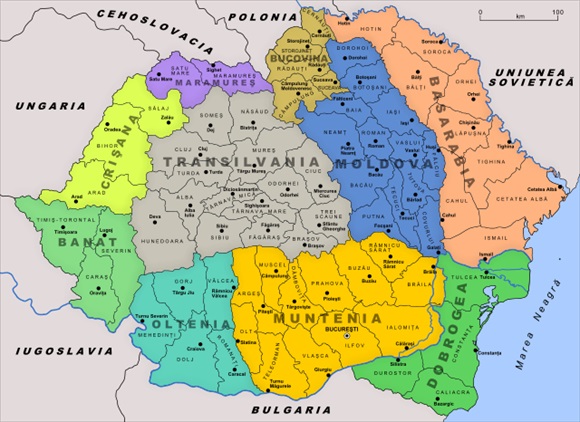
Above: Map of Romania and its neighbors in 1930. Subjected to military and diplomatic threats from its neighbors, Romania in June 1940 ceded to the Soviet Union (Uniunea Sovietica on map) the regions of Bessarabia (rose) and Bukovina (brown). Almost half of Translyvania (gray) was ceded to Hungary (Ungaria on map) in August 1940 and two counties in Southern Dobrogea were handed over to Bulgaria the next month, September 1940. In all, Romania ceded about 100,000 sq. kilometers/38,610 sq. miles of territory and uprooted about 7,000,000 inhabitants (roughly 33 percent of its population), the land grab of its neighbors never drawing the ire of West European democracies.
 |
 |
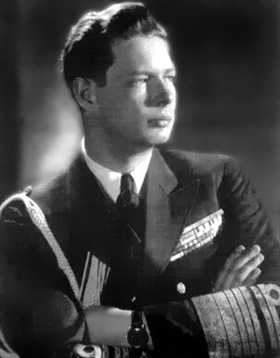
Left: King Michael I of Romania in 1947. In 1944 Michael (October 25, 1921–December 5, 2017) led a successful coup with support from opposition politicians and the army that deposed Antonescu, abolished his dictatorship, and placed Romania on the side of the Allies. On December 30, 1947, Michael was forced by the Communist Party of Romania to abdicate to the Soviet armies of occupation and the monarchy was abolished.
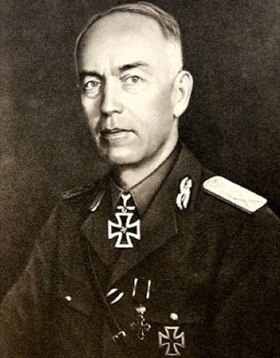
Right: Wartime photograph of Ion Antonescu. On September 5, 1940, Gen. Antonescu became Romania’s Prime Minister. He traveled to Germany and met Hitler on eight occasions between June 1941 and August 1944. On August 23, 1944, King Michael arrested Antonescu. In May 1946, the Romanian Communist government prosecuted the former prime minister in a series of People’s Tribunals on charges of war crimes, crimes against the peace, and treason. Antonescu was executed by a military firing squad on June 1, 1946.
Photo Montage of Romanian Armed Forces on the Eastern Front, 1941–1943, Set to Music and Song

World War II was the single most devastating and horrific event in the history of the world, causing the death of some 70 million people, reshaping the political map of the twentieth century and ushering in a new era of world history. Every day The Daily Chronicles brings you a new story from the annals of World War II with a vision to preserve the memory of those who suffered in the greatest military conflict the world has ever seen.