

RECORD YEAR-END DELIVERY OF B-29s
Washington, D.C. · December 31, 1943
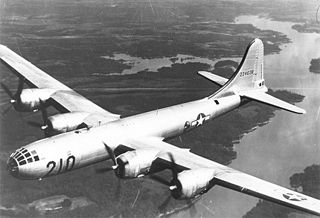
By this date in 1943 Boeing delivered its 92nd B‑29 Superfortress to the U.S. government after the giant bomber began rolling off the assembly line the previous September. Even before the country was at war and government funds had been allocated, Boeing had produced a prototype of the long-range heavy bomber and had submitted it to the U.S. Army for evaluation. In all, Boeing built 2,766 B‑29s in Wichita, Kansas and Renton, Washington. The Bell Aircraft Co. built 668 in Georgia and the Glenn L. Martin Co. built 536 in Nebraska.
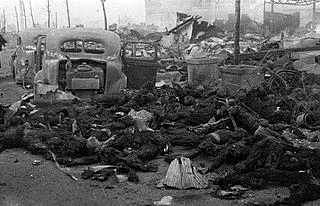
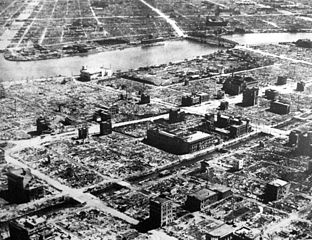
Early plans to use B‑29s against Nazi Germany were scrapped when B‑17s and B‑24s were found capable of operating from neighboring Britain and Italy. Hence, Superfortresses were primarily used in the Pacific Theater. As many as 1,000 B‑29s at a time bombed Tokyo in 1945, destroying large parts of the Japanese capital. In March 1945 alone, more than 80,000 Japanese died in an incendiary raid on the city’s center—the highest loss of life of any aerial bombardment of the war. Finally, on August 6, 1945, a B‑29 named Enola Gay dropped America’s ultimate bomb, the world’s first atomic bomb, on Hiroshima. Three days later, on August 9, another B‑29, Bockscar, immolated Nagasaki in a second effort to bring an end to the war.
On August 14, the last day of combat in World War II, B‑29s laid waste to the Japanese naval arsenal at Hikari on the southern tip of Japan’s main island, Honshū. The next day, August 15, 1945, Emperor Hirohito (posthumously referred to as Emperor Shōwa) spoke to his nation by radio, acknowledging the B‑29’s pivotal role when, in the understatement of the decade, he correctly reasoned that “the war situation has developed not necessarily to Japan’s advantage.” His country’s war in China and the Pacific Theater had brought his “good and loyal subjects” to the edge of extinction. “To continue to fight . . . would not only result in an ultimate collapse and obliteration of the Japanese race, but also the destruction of all human civilization.” In lives alone the tally of Japanese killed or missing is estimated at 1,740,000, with 94,000 military wounded and 41,000 prisoners of war; 393,400 civilians were killed and 275,000 were wounded or went missing. By comparison 108,504 Americans who served in the Pacific were killed, and 248,316 were wounded or listed as missing.
The B-29 Superfortress: Japanese Surrender Motivator
 |
 |
Left: The charred remains of Japanese civilians after the carnage and destruction wrought by Operation Meetinghouse, the March 9–10, 1945, firebombing of Tokyo. Toward the end of May, Tokyo was devastated 2 more times, leaving 3 million residents homeless.
Right: A virtually destroyed Tokyo residential section. Over 50 percent of Japan’s capital was reduced to ashes by the end of World War II. After 1 bombing run, a B‑29 flier quipped: “Tokyo just isn’t what it used to be.”
 |
 |
Left: Boeing, Bell Aircraft, and Glenn L. Martin Co. built 3,970 3,970 of these 4‑engine, propeller-driven B‑29 Superfortresses between 1943 and 1946. “Silverplate” B‑29s—Superfortresses specially modified for atomic bombing missions—carried out the destruction of Hiroshima and Nagasaki on August 6 and 9, 1945, respectively.
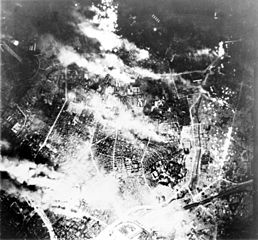
Right: Tokyo burns under a B‑29 firebomb assault, May 26, 1945. B‑29 raids on Tokyo began on November 24, 1944, and lasted until August 15, 1945, the day Japan capitulated. Additional attacks on Tokyo were carried out by twin-engine bombers and fighter-bombers.
 |
 |
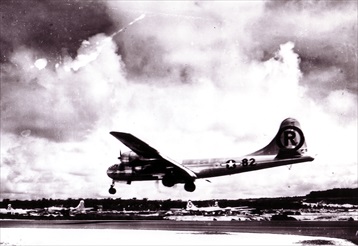
Left: Piloted by Lt. Col. Paul W. Tibbets, the Enola Gay, a Silverplate version of the Boeing B‑29 Superfortress, lands at Tinian’s North Field in the Mariana Islands at 2:58 p.m., August 6, 1945, after delivering “Little Boy” over Hiroshima, Japan.
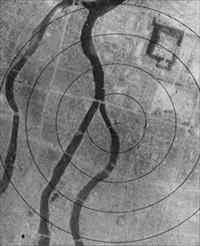
Right: Hiroshima, Japan, after the atomic bombing of August 6, 1945. The area around ground zero in 1,000‑ft/305‑m circles shows barely any structures standing. The bomb detonated in the air and the blast was directed more downward than sideways. Some 70,000–80,000 people, or roughly 30 percent of the population of Hiroshima, were killed by the blast and resultant firestorm, and another 70,000 injured. It is estimated that 4.7 sq. miles/12 sq. km of the city were destroyed. In terms of buildings, 69 percent were destroyed and another 6–7 percent damaged.
Inside a Boeing B-29 Superfortress Aircraft Factory

World War II was the single most devastating and horrific event in the history of the world, causing the death of some 70 million people, reshaping the political map of the twentieth century and ushering in a new era of world history. Every day The Daily Chronicles brings you a new story from the annals of World War II with a vision to preserve the memory of those who suffered in the greatest military conflict the world has ever seen.